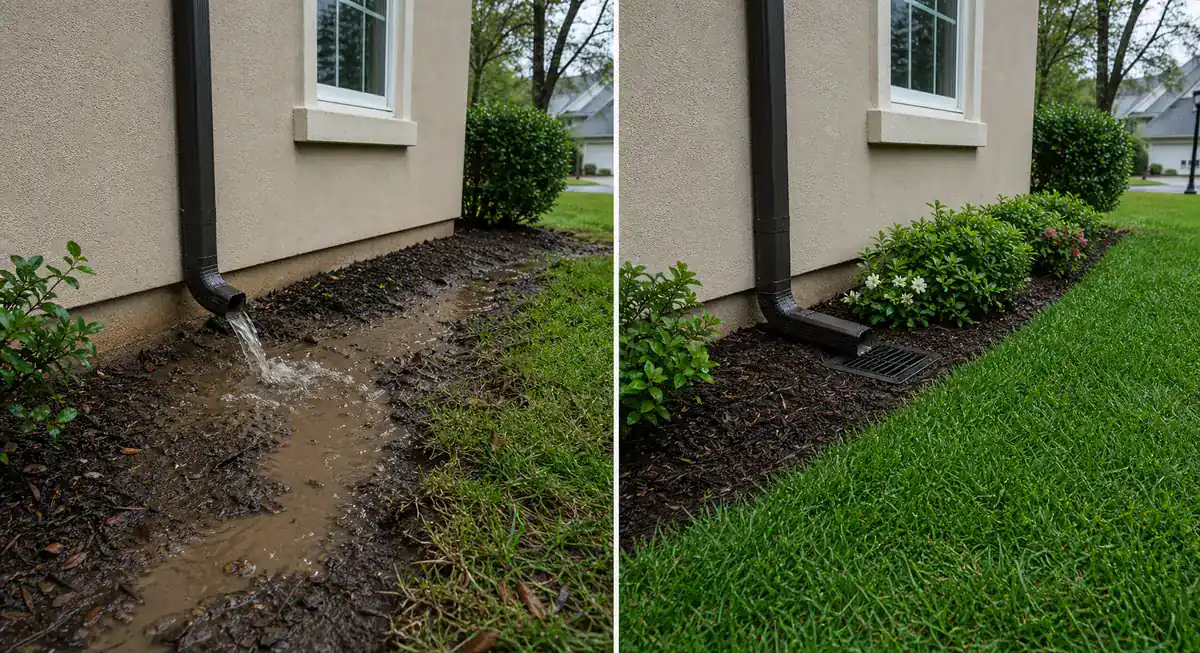
Rock Hill outdoor drainage resource
Yard Drainage Solutions for Rock Hill Yards
The best drainage plan follows the water: where it starts, how it crosses the property, where it collects, and where it can safely leave.
Start with the symptom, not a product
Pooling after a storm, a narrow soggy strip, runoff from a gutter, and water crossing a walkway can have different causes. One-size-fits-all advice often adds pipe without fixing the source.
Common outdoor solutions
A provider may compare several approaches before recommending work.
- French drains for water moving through saturated soil
- Catch basins for concentrated surface pooling
- Downspout extensions for roof runoff
- Swales or grading correction for broad surface flow
- Channel drains at suitable hardscape edges
How a provider decides
Useful decisions account for slope, soil, contributing roof area, low points, outlet conditions, maintenance, utilities, access, and how disturbed lawn or paving will be restored.
Use a water-source decision flow
Start at the first visible water. Roof runoff suggests checking gutters, outlets, and solid-pipe routing. A low surface pool suggests checking grade and collection points. A long wet strip after other water disappears may indicate subsurface movement. Broad flow crossing a lawn or hardscape suggests a surface-conveyance problem. More than one source can feed the same low area.
What can rule a solution out
A drain route without a responsible outlet is incomplete. A catch basin cannot collect water that never reaches its grate. Regrading may conflict with trees, property lines, doors, walks, and existing elevations. A buried downspout line needs suitable fall and an accessible discharge. These constraints should appear in the diagnosis before materials appear in a proposal.
Plan the complete route, including maintenance
Clemson Extension recommends treating the yard like a small watershed by observing the source and destination of runoff during rain. The finished plan should explain collection, conveyance, discharge, erosion control, future access, and surface restoration. Basins and outlets need inspection; swales need an open flow path; gutters and public-facing conveyance areas need debris management.
Prepare for a useful drainage visit
Photograph several stages of a storm from a safe location. Mark the first wet area, the deepest pool, the route water takes, and how long the soil remains soft. Note recent grading, new paving, gutter changes, irrigation, buried utilities, and places where machinery cannot enter. These details help separate symptoms from causes.
Related Rock Hill drainage guidance
Local review only: this form logs a preview in your browser console. It does not transmit or save your information, contact a provider, or promise follow-up.